Stratosphere Balloon Payload
Science payload to ~30km with live sensor logging
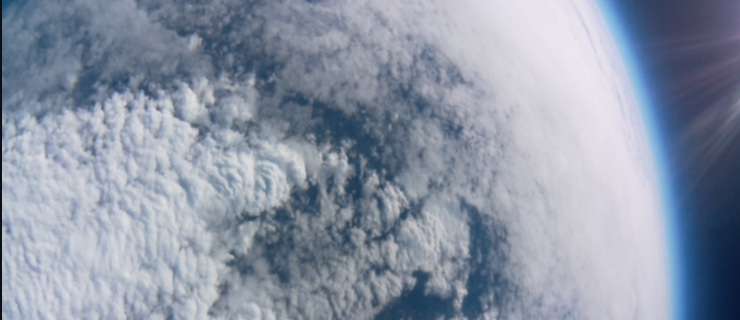
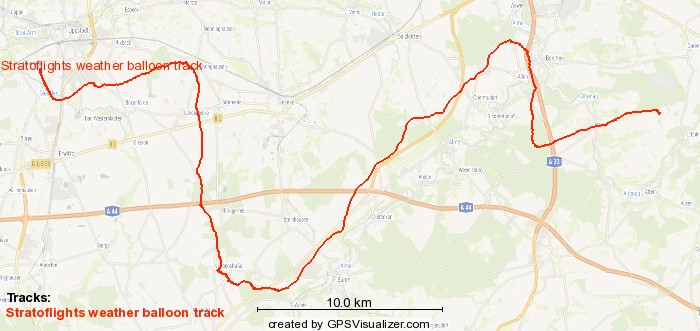
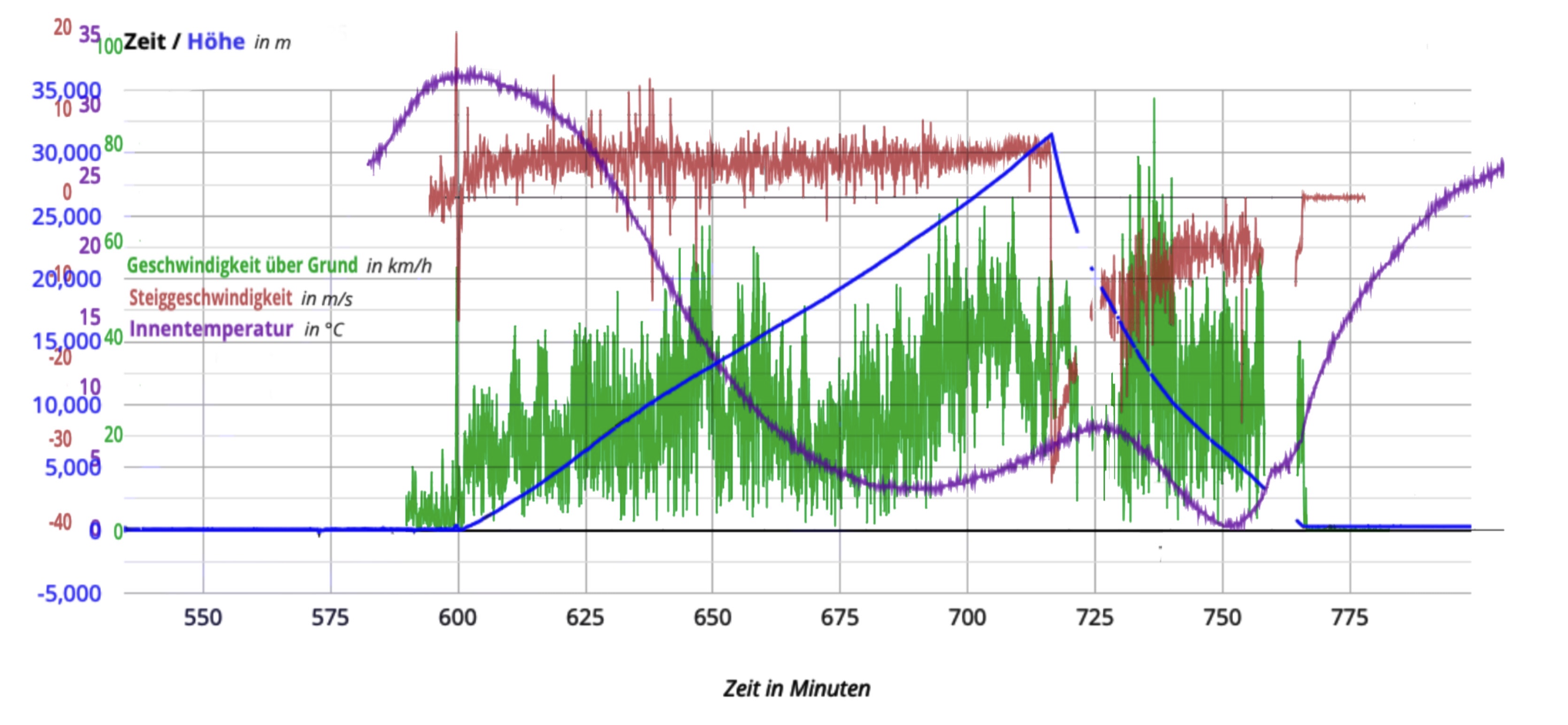
A stratospheric balloon payload built with three classmates at Evangelisches Gymnasium Lippstadt. The gondola flew a Raspberry Pi 2B running a full sensor suite: magnetometer, gyroscope, interior and exterior temperature, altitude, and pressure, alongside a GoPro and Raspberry Pi camera. The structure was 3D-printed in a teardrop form for aerodynamic stability during ascent, with an insulation layer to keep the electronics alive at stratospheric temperatures. We got the data back: full temperature, pressure, and altitude curves through the ascent and descent.
Keep a Raspberry Pi and its sensors running through a flight profile that hits near-vacuum pressure and temperatures well below -40°C, then recover the gondola and get usable data off it.
- Electronics must survive stratospheric temperatures without heaters
- Mass budget is constrained by balloon lift. Every gram of insulation costs altitude.
- Gondola needs to survive a parachute landing on whatever terrain happens to be below
- GPS tracking required for recovery: two independent trackers plus an AirTag
- Teardrop gondola form in 3D-printed structure to reduce oscillation on ascent and improve stability
- Insulation layer integrated into the outer shell with embedded nuts for assembly
- Raspberry Pi 2B for processing capability and reasonable power draw from the 10,000 mAh powerbank
- Dual GPS trackers plus AirTag for recovery. If one fails, you can still find it.
- 01
Gondola structural design in teardrop form, 3D printed with insulation layer and embedded hardware
- 02
Electronics integration: Raspberry Pi 2B, sensor suite (magnetometer, gyroscope, temp, pressure, altitude), GoPro, Pi camera
- 03
Power system: 10,000 mAh powerbank for main electronics, 9V battery for backup systems
- 04
Recovery: parachute sized to landing zone constraints, 2x GPS trackers plus AirTag
- 05
Flight: balloon released, ascent to stratosphere, burst, parachute descent, recovery
- 06
Data analysis: temperature, pressure, and altitude curves extracted from logged sensor data
Successful flight. Full sensor dataset recovered: altitude, interior and exterior temperature, pressure, magnetic field, and acceleration logged through the complete flight profile. Video recovered from both cameras. The gondola was retrieved from a farmer who was slightly amused and slightly confused by the whole situation.
- Temperature swing between launch and apogee is larger than spec values suggest once you account for sensor lag and enclosure thermal mass
- Recovery with dual GPS plus AirTag was worth the extra weight. The balloon drifted further than predicted.
Tools & Methods
Specs
- Computer
- Raspberry Pi 2B
- Sensors
- Temp, pressure, altitude, gyro, magnetometer
- Team
- 4 students, EGL