ML Robotics for Elderly Assistance
Co-authored with Harvard Summer School peers
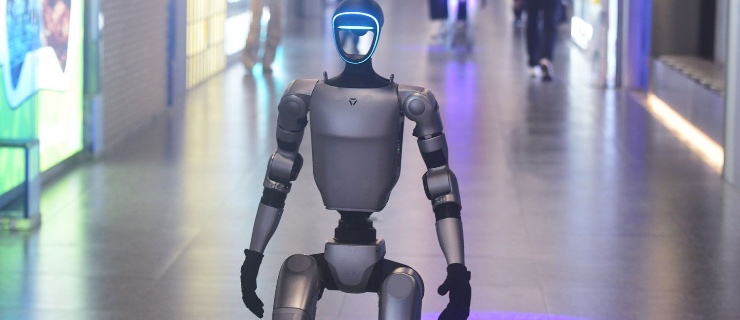
A machine learning robotics project co-developed with two Harvard Summer School peers, targeting elderly assistance with daily household tasks. Combined computer vision for object recognition with a task planning and manipulation pipeline. Written up and submitted as a collaborative research project.
Build a practical robotic assistance system around the perception and manipulation problems involved in household chores. Tasks that are obvious to humans but poorly specified for robots.
- Three-person team across different backgrounds, which required clear task decomposition and parallel workstreams
- Limited physical hardware access. System architecture had to be testable primarily in simulation.
- Vision first: reliable object recognition was the prerequisite for any manipulation pipeline, so perception was developed and validated independently before anything else
- Modular architecture separating perception, planning, and actuation. Each layer testable without the full stack running.
- 01
Object detection and classification using trained CNN models
- 02
Task planning layer mapping recognized objects and scene state to chore sequences
- 03
Manipulation pipeline for common household object interactions
- 04
Integration and testing in simulated environment
The project ran for a significant amount of time but didn't reach a working demo.
- Real-world robustness in perception is much harder than benchmark accuracy suggests. Lighting variation alone breaks classifiers that looked solid on test data.
Tools & Methods
Specs
- Focus
- Elderly daily assistance
- Approach
- CV + task planning + manipulation
- Team
- 3 co-authors (Harvard Summer School)